
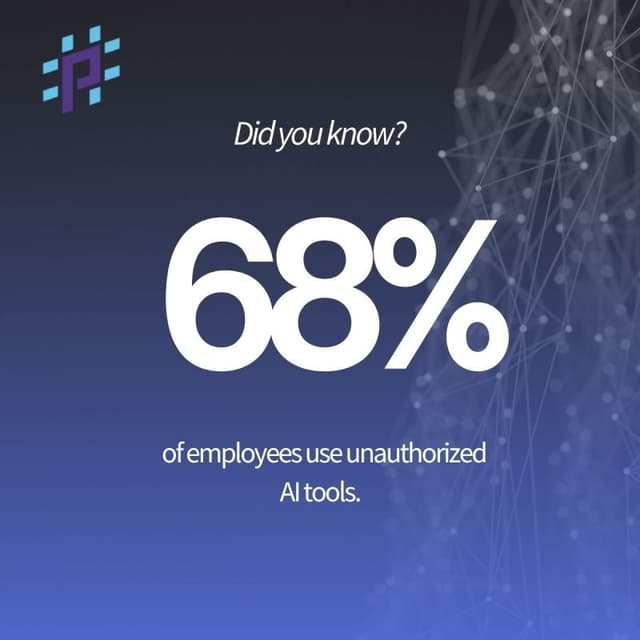
🔓 Right now, someone at your company is pasting confidential data into a free AI tool, and leadership has absolutely no idea.
Most companies adopt AI with the best intentions, but fail to realize how much sensitive data slips through the cracks. Internal documents, contracts, customer service recordings, and Teams transcripts are uploaded to various AI platforms every day.
Usually, nobody asks: Who else can access this? Is it feeding public models? Is personal info leaking out unnoticed?
Data security in AI isn't an afterthought you can just bolt on right before launch. It needs to be part of the architecture from day one—what we call Privacy by Design. And the first decision that shapes everything is how you actually integrate AI into your workflows.
When it comes to AI integration, there is a spectrum of architectural options, from the simplest to the most complex:
Public AI tools (Free chatbots): The lowest barrier to entry. Great for everyday tasks, but these consumer versions often learn from what you type. A serious risk for anything confidential.
Third-party aggregators: Quick to plug into your workflows, but nearly impossible to audit. You rarely know where your data ends up, and GDPR compliance is questionable at best.
Enterprise Cloud AI (Azure, AWS, GCP): The middle ground for most. Your data stays in a dedicated environment, the provider guarantees it won't train on your inputs, and compliance (GDPR, SOC2) is built in.
Self-hosted / On-premise models: Maximum control, but requires the most engineering effort. Everything stays on your own infrastructure, never touching the open internet, though hardware and maintenance costs are significant.